Before you get quotes
- Measure the opening and clearances. Follow our measuring guide.
- Decide whether to keep the opening size. Replacing a door with the same size is simplest. Changing size usually involves framing and possibly permits.
- List your vehicles. Include their heights and widths with mirrors, plus anything you may buy later.
- Check local rules. Ask your building department about permits, and your HOA about style restrictions, if relevant.
Decisions to make
| Decision | Options | What to consider |
|---|---|---|
| Door type | Sectional, roller, tilt, side-hinged, sliding | Space inside and outside — see door types guide |
| Material | Steel, wood, aluminium, fibreglass, vinyl | Weight, maintenance, climate, appearance |
| Insulation | Uninsulated to highly insulated | Heated or attached garages, noise |
| Spring system | Torsion or extension | Headroom available and manufacturer recommendation |
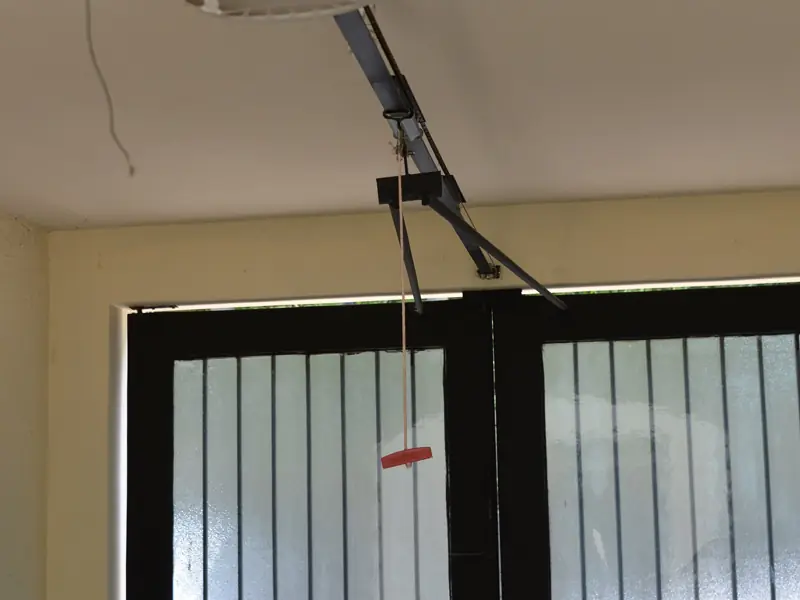
| Opener | Ceiling (chain/belt/screw) or wall-mounted | Headroom, noise, smart features |
| Windows & style | Panel design, glazing, hardware | Privacy, light and curb appeal |
Questions to ask installers
- Are you licensed and insured where required in my area?
- Will you measure on site before ordering?
- What exactly is included — removal of the old door, disposal, new tracks, springs, weather seals, opener?
- Which spring system and cycle rating are you quoting?
- What warranties apply to the door, hardware and labour?
- Will you handle permits if needed?
- What is the expected lead time and installation duration?
On installation day
- Clear the garage entrance and the area along the tracks and ceiling.
- Move vehicles out and make sure there is power near the opener location.
- Ask the installer to demonstrate manual release, safety reversal and photo-eye testing.
Safety
Springs are dangerous
Garage door springs are under high tension. Adjusting or replacing springs, cables or bottom brackets can cause serious injury; this work is widely recommended for trained professionals. Test your opener’s safety reversal and photo-eyes regularly following the opener manufacturer’s instructions.
Request installation quotes
Send a request below and the site owner will try to connect you with a local professional. A response isn’t guaranteed.
Frequently asked questions
Can I install a garage door myself?
Some homeowners do, but springs store a lot of energy and can cause serious injury. Torsion springs in particular are widely recommended for professional installation.
How long does installation take?
It depends on the door, opener and any framing work. Ask your installer for an estimate based on your site.
Do I need a permit?
Requirements vary by location, especially for structural changes or wind-load rated doors. Check with your local building department.